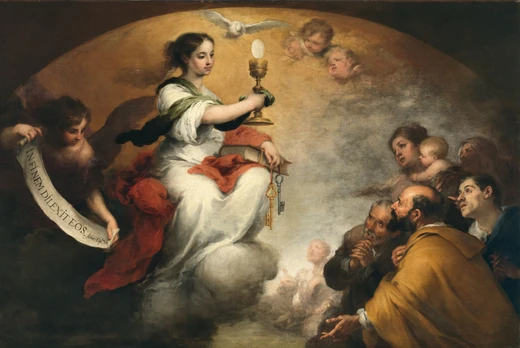
Tomás de Torquemada
First Grand Inquisitor of the Spanish Inquisition.

Wikipedia / Wikimedia Commons
His name has become synonymous with cruelty, religious intolerance, and fanaticism owing to the Inquisition's use of torture and burning at the stake, practices he approved and advocated.
- field
- Inquisitor, Dominican friar
- nationality
- Spanish (Castilian)
Lore & Background
Torquemada entered the local San Pablo Dominican monastery at a very young age. As a zealous advocate of church orthodoxy, he earned a reputation for learning, piety, and austerity, and was promoted to Prior of the monastery of Santa Cruz at Segovia. He later subdued Ferdinand's ambitions and became his confessor as well. Torquemada deeply suspected Marranos and Moriscos as a menace to Spain's welfare. So many clemency petitions reached Rome that the Pope became aware of Torquemada's severity, and Isabella and Ferdinand also protested the money diverted to the Holy Office. Stripped of real power, Torquemada retired to the monastery of St.
Reader's Guide
Under his direction, the Inquisition expanded from a single tribunal to a network of two dozen Holy Offices, and he promulgated the articles of faith that guided its investigations. His legacy is deeply controversial, with some contemporary chroniclers calling him 'the hammer of heretics, the light of Spain,' while modern historians emphasize the severity and abuses that led to papal intervention and his eventual retirement.
Frequently Asked Questions
Who is Tomás de Torquemada?
Tomás de Torquemada was a Castilian Dominican friar who served as the first Grand Inquisitor of the Spanish Inquisition. He is historically remembered as the principal architect of that institution's early operations.
What role did Tomás de Torquemada hold in the Inquisition?
As the inaugural Grand Inquisitor, he designed the procedural framework and oversaw the day-to-day enforcement of the Spanish Inquisition. He explicitly approved and promoted the use of torture and execution by burning at the stake as instruments of religious conformity.
What nationality and religious order was Tomás de Torquemada associated with?
He was a Castilian (Spanish) national and a member of the Dominican Order. His standing within the Dominican friary provided the theological authority he leveraged to shape Inquisitorial policy.
How does Tomás de Torquemada's story end?
Torquemada died in 1498 in Madrid while still holding his Inquisitorial office. He was interred at the Dominican convent of San Pablo, and his reputation as a symbol of religious persecution outlived him by centuries.
Why is Tomás de Torquemada important in Christian and Western history?
His name has become a cultural shorthand for religious intolerance and fanaticism. He is studied as a cautionary figure whose endorsement of extreme punitive measures defined the most feared chapter of the Spanish Inquisition.
More in Christian Reformers And Mystics 1-23
Spotted an error? Know more?
This is a living reference — every entry is fact-audited, and reader corrections feed straight into our audit queue. Suggest an edit · See this site's audit record