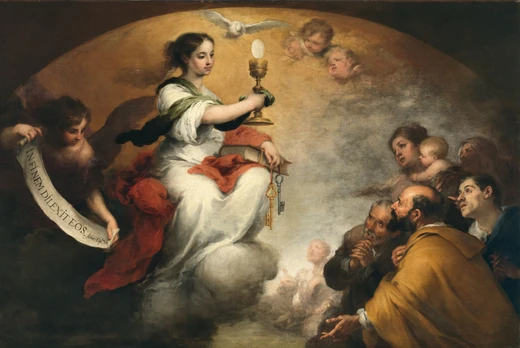
Theodoret
Antiochene theologian, bishop, and commentator in Christological disputes.

Wikipedia / Wikimedia Commons
Theodoret of Cyrus (c. He participated in 5th-century Christological controversies within the Eastern Roman Church, notably opposing Cyril of Alexandria's Twelve Anathemas and defending Nestorius until the Council of Chalcedon.
- field
- Theology, biblical commentary
- nationality
- Eastern Roman (Syrian)
- known_for
- Opposing Cyril of Alexandria's Twelve Anathemas; participation in the Council of Chalcedon; exegetical works
Lore & Background
Theodoret was born to prosperous parents in Antioch. His mother, after twelve years of childlessness, was promised his birth by the hermit Macedonius the Barley-Eater on condition of the child's dedication to God, whence his name 'Theodoret' ('gift of God'). He received a broad classical education alongside religious training, studied the works of Diodore of Tarsus and Theodore of Mopsuestia, and became a lector in Antioch. After his parents' death, he distributed his fortune to the poor and became a monk at the monastery of Nicerte near Apamea for about seven years.
Reader's Guide
Theodoret's significance lies in his role as a leading voice of the Antiochene theological tradition during the Nestorian controversy. Restored at Chalcedon after anathematizing Nestorius, he was declared orthodox. His exegetical works, especially commentaries on the Psalms, prophets, and Pauline Epistles, are his most extensive and enduring contribution. He is remembered as 'Blessed' in the Eastern Orthodox Church.
Did You Know?
- He understood Syriac as well as Greek, but knew neither Hebrew nor Latin.
- His birth was promised by the hermit Macedonius the Barley-Eater on condition of his dedication to God.
Frequently Asked Questions
Who is Theodoret?
Theodoret of Cyrus was a 5th-century Eastern Roman (Syrian) bishop, theologian, and biblical commentator rooted in the Antiochene school. He became a major voice in the Christological debates that defined 5th-century Eastern Christianity.
What is Theodoret most famous for?
He is best known for publicly opposing Cyril of Alexandria's Twelve Anathemas and for defending Nestorius's Christological position. His exegetical commentaries on Scripture are also a central part of his scholarly legacy.
How did Theodoret's stance shift at the Council of Chalcedon?
Despite years of defending Nestorius against Cyril, Theodoret ultimately accepted and signed the Chalcedonian Definition in 451. This reconciliation marked a decisive turning point in both his personal career and the broader Christological dispute.
Why does Theodoret matter to the history of Christian theology?
His writings and public arguments preserve the Antiochene perspective on the nature of Christ, offering a counterpoint to the Alexandrian position. He is essential for understanding the full range of theological positions that existed before and during Chalcedon.
What fields and works is Theodoret associated with?
His primary contributions fall in theology and biblical exegesis, especially his commentaries on both the Old and New Testaments. He also produced historical and apologetic texts that directly engaged the Christological controversies of his time.
More in Christian Reformers And Mystics 1-23
Spotted an error? Know more?
This is a living reference — every entry is fact-audited, and reader corrections feed straight into our audit queue. Suggest an edit · See this site's audit record