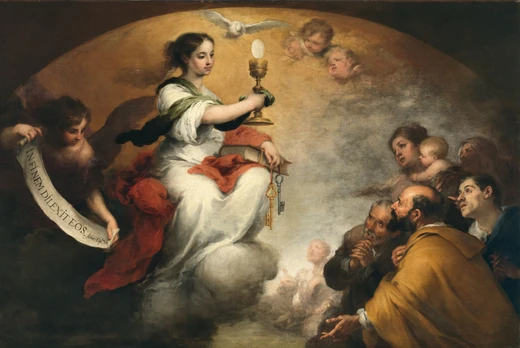
Stefan Yavorsky

Wikipedia / Wikimedia Commons
- born
- 1658
- died
- 8 December [O.S. 27 November] 1722
- field
- Archbishop, statesman, theologian
- nationality
- Russian Empire (born in Polish–Lithuanian Commonwealth)
- known_for
- First president of the Most Holy Synod; opposition to Peter the Great's church r
Lore & Background
His preaching made him well known in Kiev. The tsar ordered him to remain in Moscow, and in April he was made archbishop of Ryazan and Murom. He lived in Moscow, Saint Petersburg, and Ryazan, rarely returning to Ukraine. Initially supporting Peter's reforms, he later opposed them as they restricted church rights. Yavorsky died the following year; shortly before his death, suspected of involvement in a publication accusing Peter of being the Antichrist, he was interrogated at home by members of the Synod and Senate. It is possible that only his death saved him from punishment.
Reader's Guide
Though initially a supporter of the tsar's reforms, Yavorsky's growing opposition—rooted in his defense of church autonomy and Orthodox doctrine—placed him at odds with Peter. Yavorsky's career illustrates the tensions between traditional ecclesiastical authority and the modernizing, absolutist state. His European education and literary output, including panegyrics and sermons, made him one of the most learned church figures of his era, yet his legacy is overshadowed by his conflict with Peter and his replacement by the more compliant Prokopovich. The interrogation he faced shortly before his death underscores the precarious position of church leaders who challenged the tsar's will.
Did You Know?
- Yavorsky was born in 1658, the same year as the publication of John Amos Comenius's Orbis Pictus and the death of Oliver Cromwell.
- Shortly before his death, Yavorsky was interrogated at home by members of the Synod and Senate over suspected involvement in a publication accusing Peter of being the Antichrist.
Gallery


Frequently Asked Questions
Who is Stefan Yavorsky?
Stefan Yavorsky was a Ukrainian-born archbishop, theologian, and statesman who served in the Russian Empire during the early 18th century. He is best remembered as the inaugural president of the Most Holy Synod, the governing body that replaced the Patriarchate of Moscow.
What was Stefan Yavorsky's role in the Russian Church?
He held the rank of Archbishop and went on to become the first president of the Most Holy Synod, the new ecclesiastical authority established under Peter the Great. In that capacity he oversaw church administration and theological policy across the Russian Empire.
Why did Stefan Yavorsky oppose Peter the Great's church reforms?
Yavorsky resisted the sweeping changes Peter imposed on the Russian Orthodox Church, particularly the abolition of the patriarchate and the subordination of ecclesiastical affairs to state control. His opposition reflected a broader concern that secular authority was encroaching on the spiritual independence of the Church.
When was Stefan Yavorsky born and when did he die?
He was born in 1658 in the Polish–Lithuanian Commonwealth and died on 8 December 1722 (27 November Old Style) in the Russian Empire. His life thus spanned the late 17th and early 18th centuries.
Why is Stefan Yavorsky considered important in church history?
As the first president of the Most Holy Synod, he shaped the institutional structure of the Russian Orthodox Church during a transformative period of state-church relations. His theological writings and political stance also made him a key figure in the debate over church autonomy versus imperial authority.
More in Christian Reformers And Mystics 1-23
Spotted an error? Know more?
This is a living reference — every entry is fact-audited, and reader corrections feed straight into our audit queue. Suggest an edit · See this site's audit record